 University of North Texas

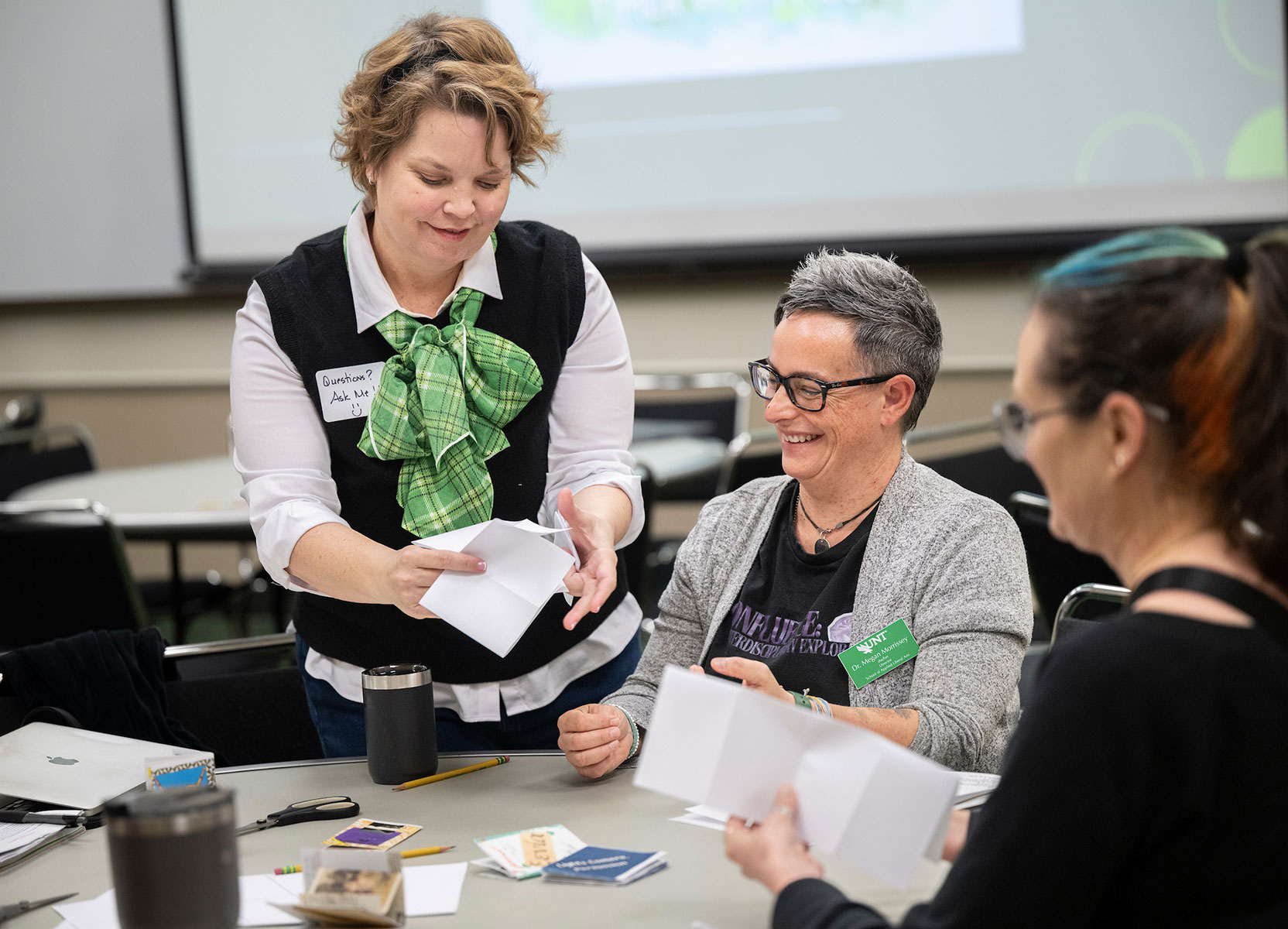
DENTON (UNT), Texas — Educators and staff from the University of North Texas and other institutions gathered at UNT to learn about project-based learning at a
faculty-led symposium.
“Learning That Works: Transforming Teaching for Impact through Work-Integrated and
Project-Based Learning” explored how the teaching method unites classrooms, community
partners and workplaces to support student success. The symposium was hosted by The Teaching Hub within the UNT Learning Ecosystem for Empowering Futures (LEEF) and led by faculty in the Department of Multidisciplinary Innovation.
Project-based learning is a methodology that prioritizes exploring subjects through
real-world problem-solving. Instead of paper-based or teacher-led instruction, students
spend an extended period on a single complex question or issue and develop a response
or solution.
According to Shari Childers, associate dean of multidisciplinary innovation, project-based
learning gives students “authentic and meaningful work” through active engagement.
“When students feel like a necessary part of a project, that is where real motivation
comes from,” Childers said.
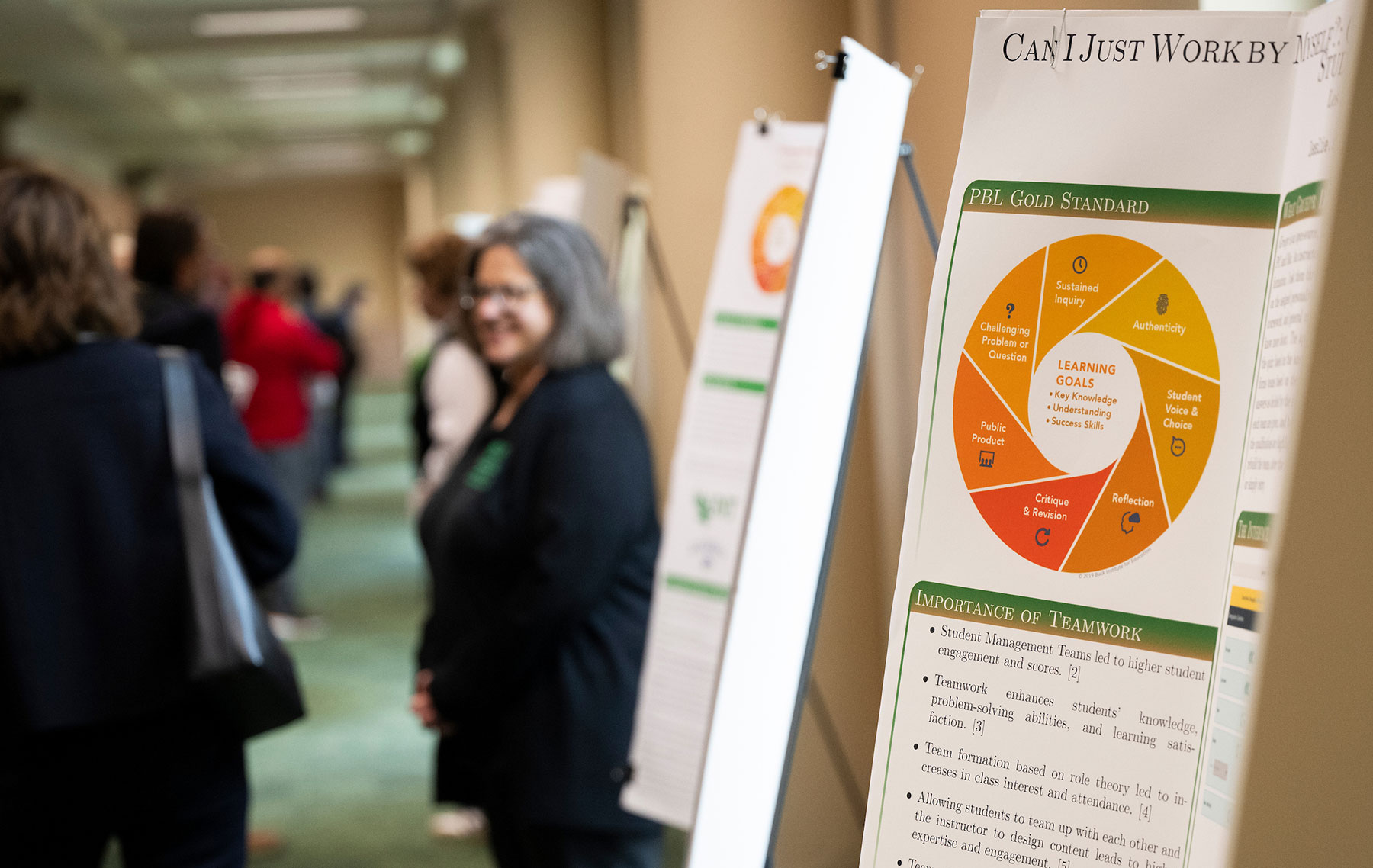
Project-based and work-integrated learning allow students to apply their knowledge
outside the classroom and acquire valuable experience, whether through site visits
and case studies with industry partners or feedback on final projects and syllabi
from working professionals.
At the symposium, clinical associate professors of multidisciplinary innovation Sarvjeet
Singh and Dev Mukherjee discussed industry engagement as an important opportunity
for experiential learning.
“They see themselves not only as students but also as professionals, even before graduation,”
Singh said.
Students who participate in project-based and work-integrated learning gain confidence
in their skills and understand how those skills translate to career readiness. Kevin
Sanders, director of co-curricular student services for project-based learning and
career services, said educators should encourage students to work on semester-long
projects based on real job competencies.
“This kind of learning creates great humans that other great humans want to hire,”
Sanders said.