 University of North Texas

DENTON (UNT), Texas — The rainiest day of the year didn’t dampen the enthusiasm for UNT’s 2026 University Research Day, as more than 700 presenters and attendees filled the Union’s Emerald Ballroom to bear witness to the depth and breadth of cutting-edge research happening at UNT.
From a bustling morning poster session to interactive panel discussions to networking events promoting interdisciplinary research opportunities, UNT’s status as a R1 research university was on full display. The morning kicked off with opening remarks from Vice President of Research and Innovation Pamela Padilla.
“It's really a great time to showcase the wide variety of research we do here on campus, and the breadth and depth of our work really helps with our ability to maintain our R1 status as a university,” Padilla said. “That speaks volumes about what we’re doing in terms of the generation of new knowledge. Whether that's through our mentoring of doctoral and master's students who conduct research as well as our faculty who contribute to that research and the knowledge base that is disseminated across the world because of the efforts of our faculty and student researchers.”
Attendees had the opportunity to explore research efforts through more than 475 research posters that were displayed across two sprawling rooms on the Union’s third floor. AI and data science themed research posters have grown from less than 10% of what was on display in 2023 to about 40% this year, while the number of health research posters more than doubled. The growth reflects how UNT researchers and students are responding to emerging technologies and societal needs, using research and innovation to develop knowledge and solutions with potential impact well beyond the university.

At the morning panel, “Bridging University Research and the Marketplace,” experts from academic, investment and startup backgrounds provided insight into how universities, industry and investors collaborate to transform research discoveries into real-world solutions.
The “Learning Amid Unscripted Times – Addressing Pressing Challenges and Imagining Possible Futures” panel focused on the challenges of AI use in higher education and how that can impact what students actually learn. As the interdisciplinary panel considered ways to address these challenges, the consensus answer was to work together to support student success.
“When communities fall apart, younger generations tend to carry the consequences,” said Upward Bound project coordinator Mai Zaru. “The more we divide, the wider the cracks become. It's finding spaces like this, collaborations where you're bridging across departments is how we help our students not fall through these cracks.”
Postdoctoral researchers got a rundown of the campus resources available to them — and a chance to shape what comes next — during the “Postdoctoral Scholars & Early-Career Scientists” panel. Panelists walked through what their offices offer, from one-on-one teaching consultations and monthly LEEF After Hours dinners to faculty writing retreats, promotion and tenure workshops and individualized visa sponsorship support. Their shared advice: start early on your network, publication record and recommendation letters and look beyond your own department.
The day culminated in a panel titled “Research for Broader Impact,” where graduate and undergraduate students shared the research they’ve been conducting while at UNT.
“We want to highlight our students’ research and show that their impact extends beyond our campus,” said Brenda Barrio, associate vice president of Graduate Studies and Student Research.
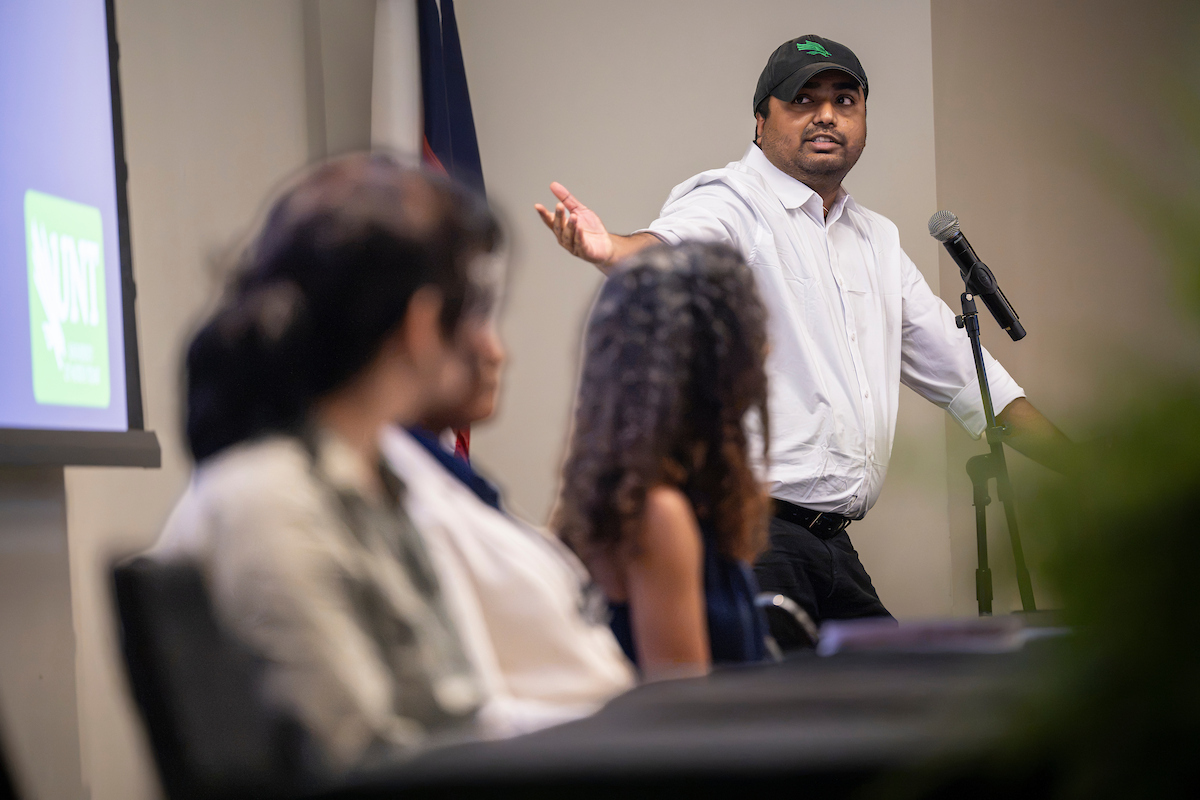
Five students presented four projects with topics ranging from nutritional care for dementia patients to environmental assessments. Each student also shared how the knowledge from their research can go on to benefit the general public.
Between the panels, student and faculty researchers connected with each other at two Networking & Connection Hub sessions. Moderated by Barrio, the interactive session allowed attendees to engage about topics relevant to academic research.
Students of all levels attended the event, ranging from a freshman to Ph.D. students. Sitting at different tables in the Chilton Meeting Room, students introduced themselves and explained their specific research pursuits. Research interests were diverse, with students studying a myriad of topics such as immigration, music and education, among others. Students met potential mentors and collaborators, researchers explored new pathways for their discoveries, and faculty, industry and community partners shared perspectives that can help move research toward meaningful applications.
Across the day's presentations, panels and conversations, one theme continued to emerge: research impact grows when people have opportunities to connect.
By creating space for discovery, collaboration and engagement across disciplines, the event helped strengthen the relationships that fuel UNT’s research enterprise and create new possibilities for innovation.